


About
My story
I was born in Fish Hoek, on the False Bay side of Cape Town, and I started carving at nineteen. That is more than forty years of learning what a piece of timber wants to become, and I am still learning.
For years my business was called Anything But Birds — everyone assumes a carver does ducks and songbirds, and I wanted to carve everything else. Faces, mostly. A face is where the wood stops being wood.
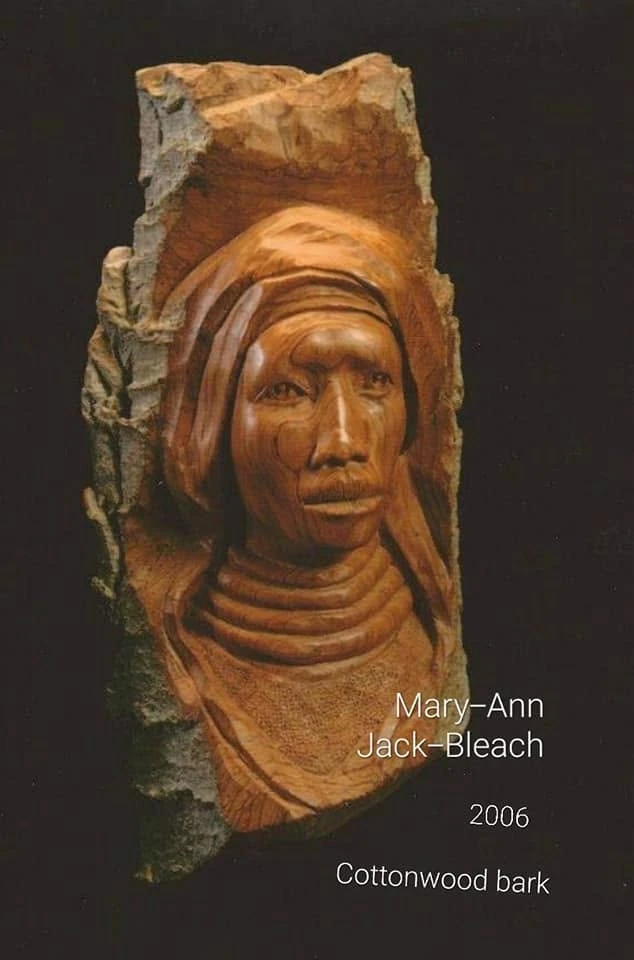
Much of my work is relief carving, where the image rises out of a single panel. I also work in the round, and in cottonwood bark, which is soft enough to hold fine detail and forgiving enough to let a face emerge from whatever the bark was already doing. Pieces of mine are in private collections in South Africa, England, the United States and Canada.
Before carving, and alongside it
In 1987 I was recruited to London, Ontario as an occupational therapist, to work in the transplant unit at University Hospital. Both jobs turn out to be the same job: paying close attention to a person, and helping something come out that was already there.
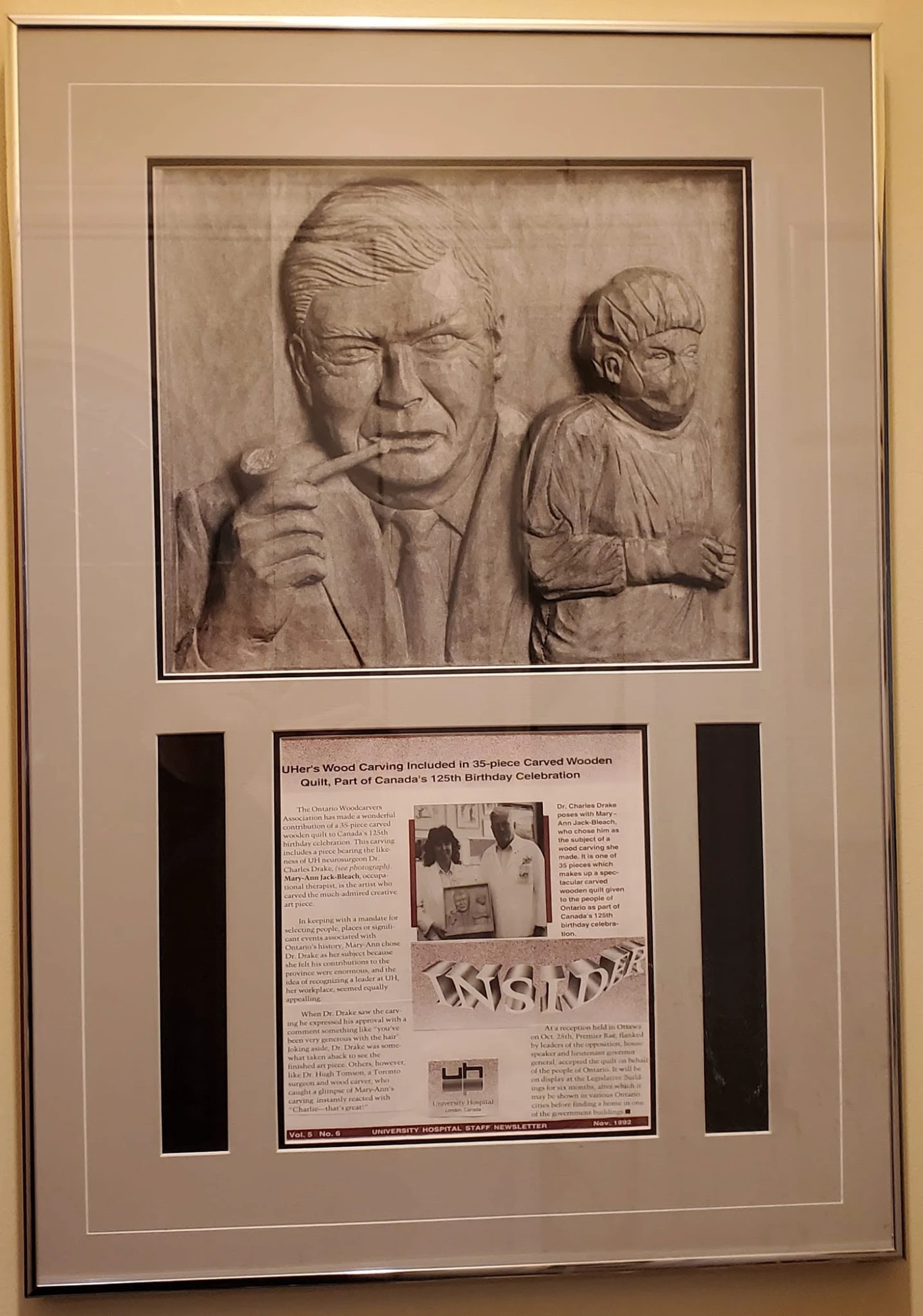
In 1992 the Ontario Woodcarvers Association made a carved wooden quilt — thirty-five panels, carved by twenty-one clubs across the province — and gave it to the people of Ontario for Canada’s 125th birthday. My panel was Dr Charles Drake, the neurosurgeon at University Hospital, because his contribution to the province was enormous and he was a leader at the place I worked. When he saw it he said I had been very generous with the hair. The quilt was accepted that October and unveiled in the main hall of the Legislative Building.
Writing and judging
I have written three articles for Woodcarving Illustrated: a relief project honouring the armed forces, a piece on putting a portfolio together, and one on carving realistic wrinkles and folds, written with Fred Zavadil. In 2011 Fox Chapel included the first of those in Relief Carving Projects & Techniques. I have also written for Canadian Woodworking and for the Ontario Woodcarvers Association journal.
I have judged carving shows across Ontario since the early nineties. It is a good way to be reminded how much skill there is in this country, and a good way to think hard about what actually makes a carving work.
Originality and creativity are key factors in judging carvings. The carvings that won the first three places were those that included a high degree of difficulty in the design and execution, and showed emotion and movement.
Judges Perspective, Ontario Woodcarver, 2008
Teaching
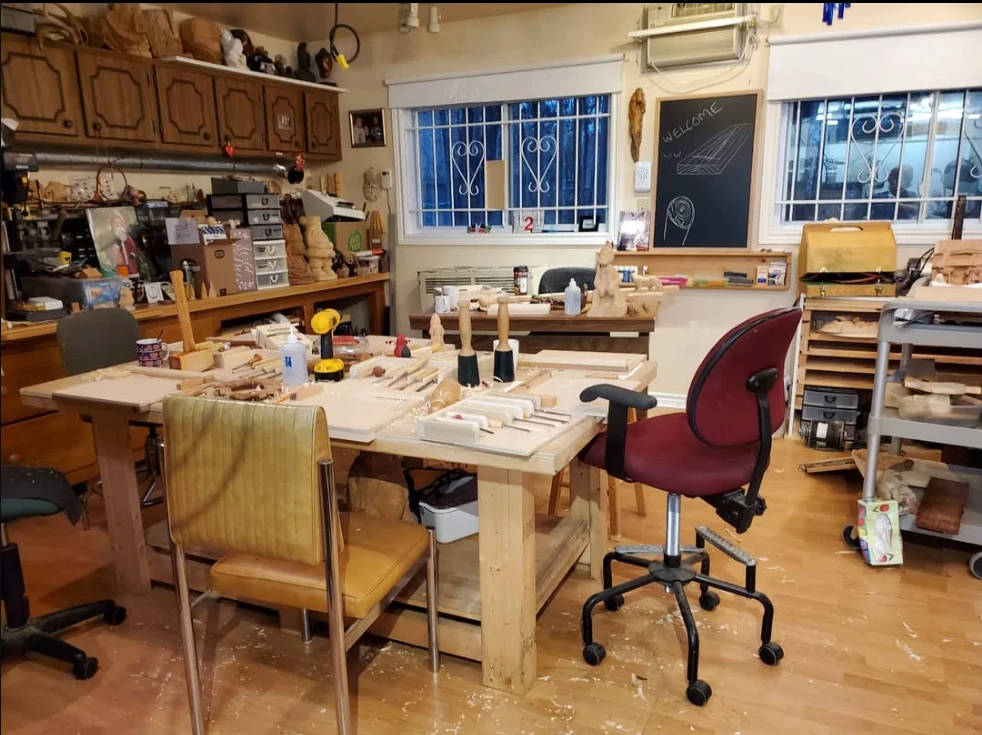
When I teach relief carving I emphasise that the subject needs to be strong and focussed, with no untidy distractions around the edges. Bigger is not always better. Sometimes it is good to leave rest spots for the eye in a busy carving. And go easy on the gloss — a high shine flattens a carving, because the reflection makes the detail hard to see.
The best part of a class is the moment someone stops fighting the wood.
Ribbons shouldn’t motivate us, but our love of carving and gradually improving and having many ‘aha’ moments should keep us going. Don’t take yourself too seriously and remember you can never have enough tools or wood.
Judges Perspective, Ontario Woodcarver, 2008